Le Centre de Robotique et de Vision industrielle (CRVI) dispose de trois laboratoires munis des équipements de pointe. Les clients du CRVI peuvent tester l’efficacité des robots et caméras numériques avant de faire leur choix technologique, réduisant considérablement le risque de leur investissement.
Le CRVI ne vend pas d’équipements, mais est complémentaire au réseau des équipementiers en automatisation. Au CRVI, nous augmentons la performance de votre processus d’acquisition et d’implantation, tout en maximisant la possibilité d’obtention de subventions.
Completez le court questionnaire et prenez rendez-vous!
Explorez nos laboratoires
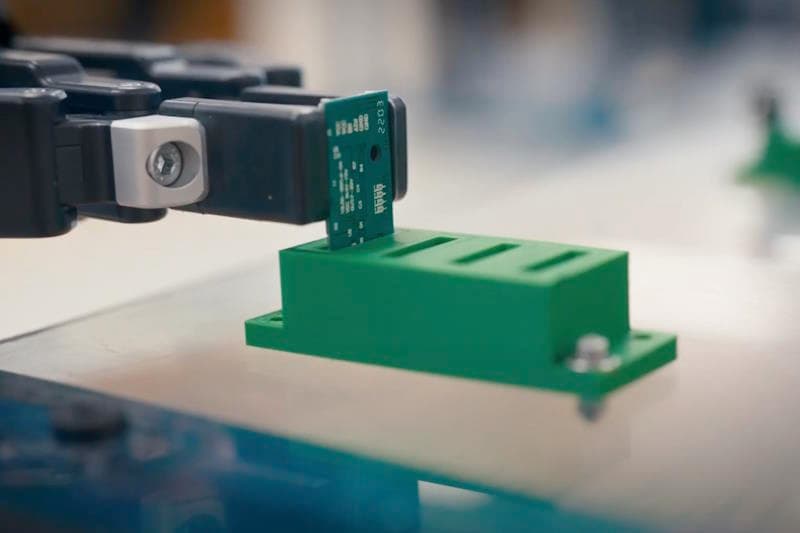
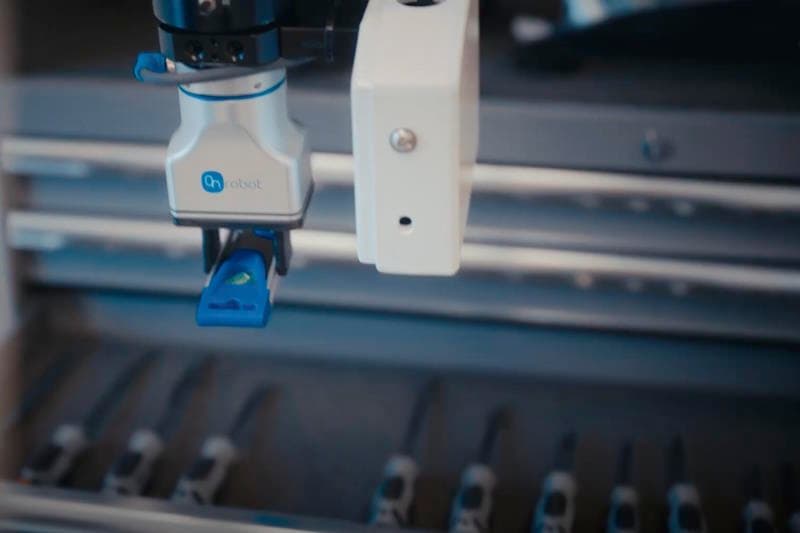
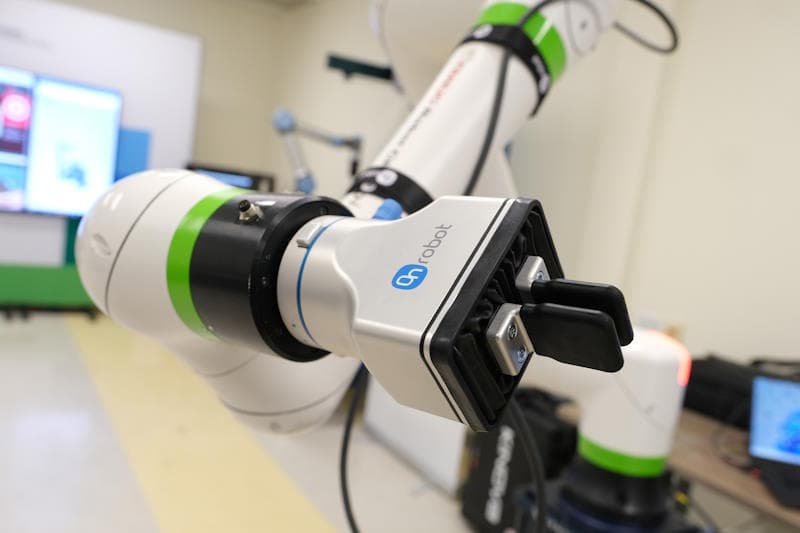
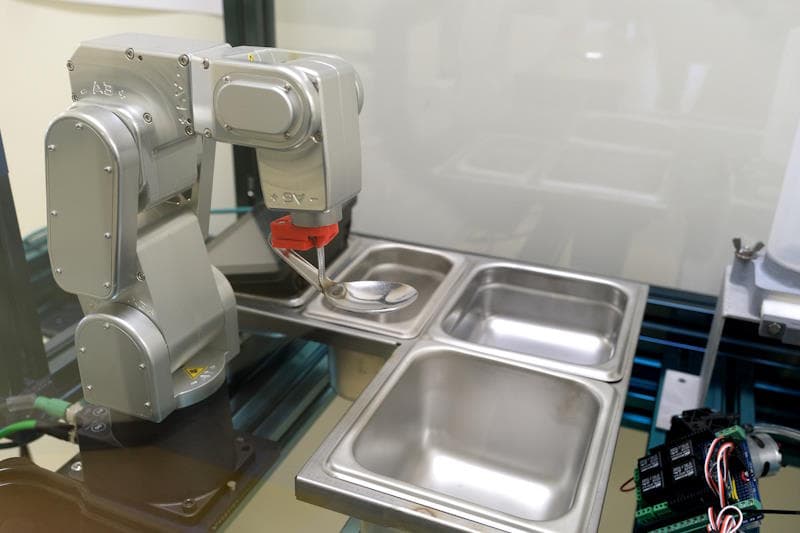
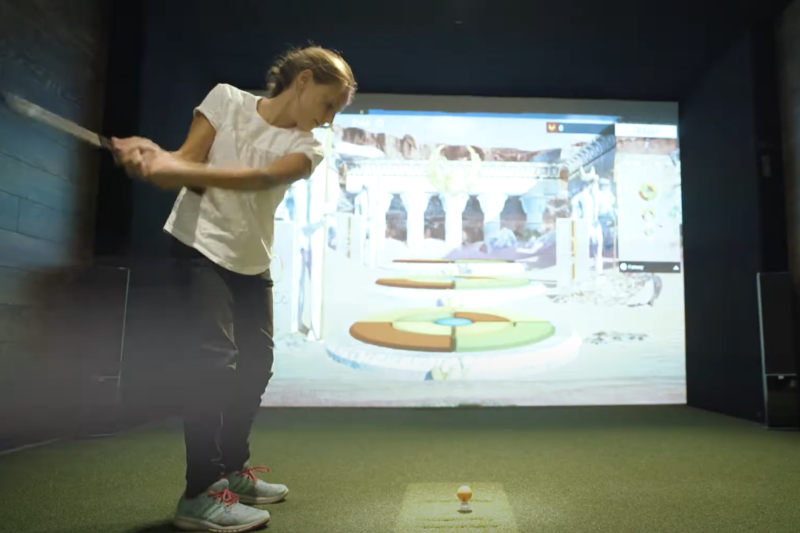
La robotique collaborative, également connue sous le nom de cobotique, fait référence à l’utilisation de robots qui travaillent en collaboration avec les humains dans un environnement de travail partagé. Contrairement aux robots industriels traditionnels qui sont souvent conçus pour travailler séparément des travailleurs humains, les robots collaboratifs sont conçus pour interagir de manière sécuritaire et efficace avec les humains, en partageant l’espace de travail, les tâches et les responsabilités.
L’un des principaux avantages de la robotique collaborative est sa capacité à combiner les forces et les compétences des robots et des humains. Les robots collaboratifs peuvent prendre en charge des tâches répétitives, dangereuses ou physiquement exigeantes, ce qui permet aux travailleurs humains de se concentrer sur des tâches plus complexes, créatives ou cognitives. Cela peut augmenter la productivité, améliorer la qualité des produits, réduire les risques d’accidents et favoriser une collaboration harmonieuse entre les humains et les robots.
Notre laboratoire est équipé de robots des marques et modèles les plus populaires sur le marché, ainsi que des outils, caméras et scanners spécifiques à ce type d’application. C’est un environnement idéal pour les comparer et tester rapidement leur efficacité des robots en fonction des tâches que vous leur réservez. Réduisez le risque de votre investissement en faisant un choix éclairé. De plus, le CRVI peut en améliorer la performance en combinant ceux-ci avec de l’intelligence artificielle au besoin.
Liste de nos équipements
FANUC
- CR 35 Kg de charge utile
- CRX 10iA/L
- CRX 25iA/L
KUKA
- KMR iiwa
- LBR iiwa 14 R820
- plateforme mobile KMR iiwa
- Omnimove
Autres robots
- Kinova: Gen 3
- Kinova: Link6
- Universal Robot UR10E 10 kg
- Universal Robot UR5e
- Doosan M1013
- MiR 200 W
Autres équipements
- Caméras Fanuc 3DA et 3DV70 & 200;
- Diverse tables et montages Vention
- Préhenseurs & caméras : Robotiq,
- Schunk, Onrobot
- Main Schunk SVH 5 doigts
- Logiciels de simulation: Isaac,
- Siemens, Robot guide, Robot DK…
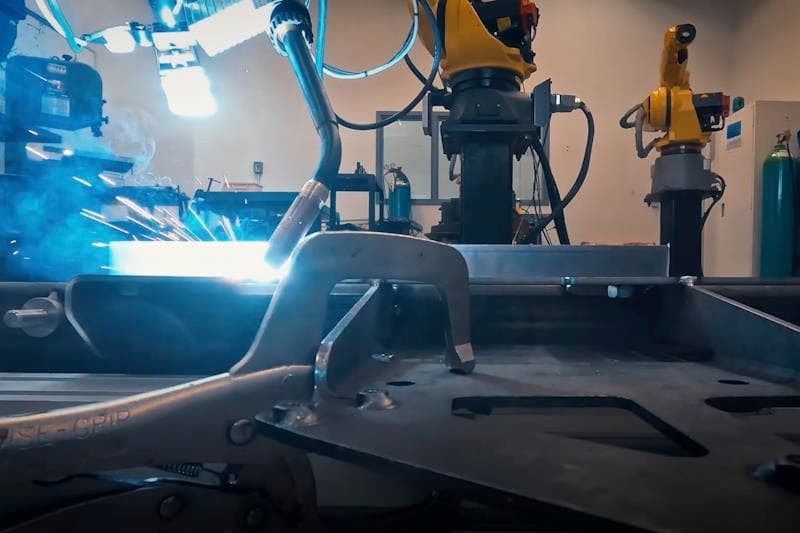
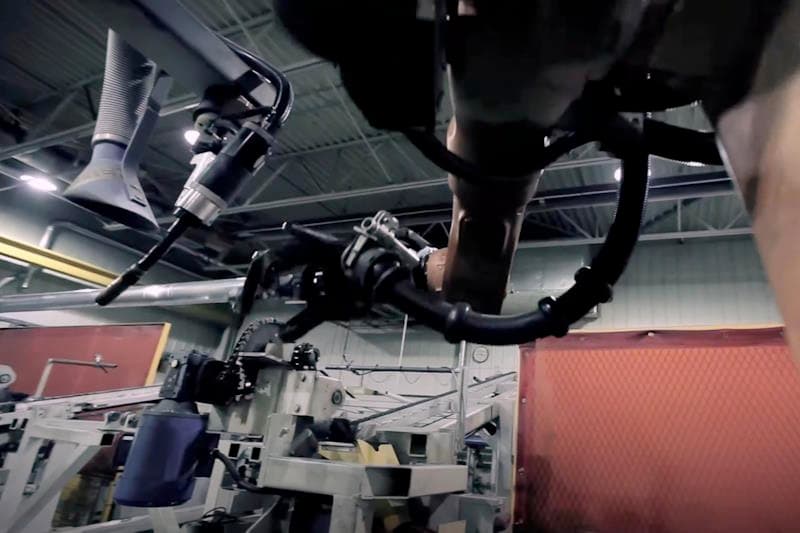
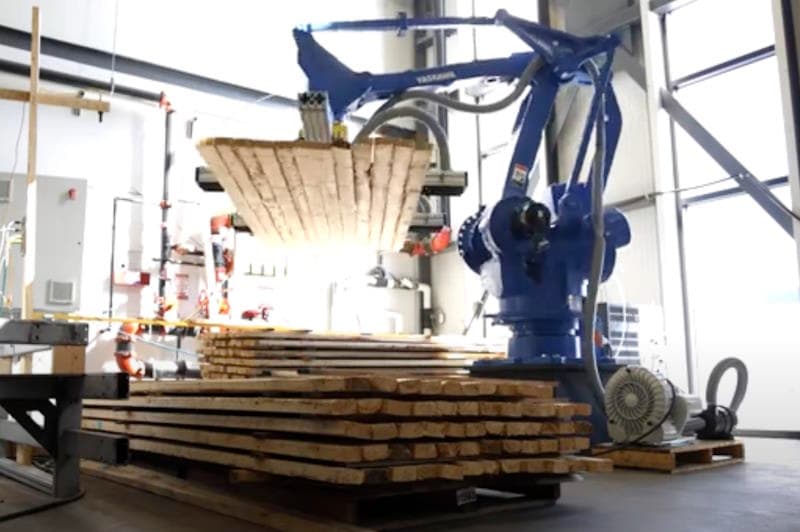
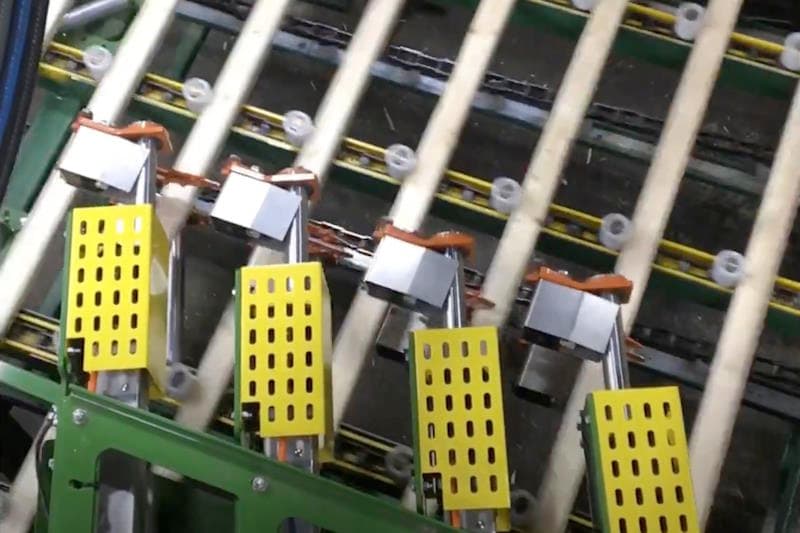
La robotique industrielle est une branche de l’automatisation qui se concentre sur l’utilisation de robots dans les environnements de production et de fabrication. Elle implique l’application de robots programmables et de systèmes robotisés pour effectuer diverses tâches et processus dans les industries manufacturières.
Les robots industriels sont conçus pour exécuter des opérations répétitives, précises et souvent physiquement exigeantes avec une grande efficacité et une précision constante. Les tâches couramment effectuées par les robots industriels incluent le soudage, l’assemblage, la manutention de matériaux, le levage et le déplacement d’objets lourds, le tri et l’emballage, ainsi que l’inspection qualité. Ces robots peuvent être programmés pour suivre des trajectoires précises, détecter des objets, effectuer des mesures, communiquer avec d’autres machines ou s’intégrer à des systèmes de contrôle et de supervision.
L’utilisation de la robotique industrielle présente de nombreux avantages, notamment l’amélioration de la productivité, de la qualité et de la précision des opérations, la réduction des coûts de main-d’œuvre, l’augmentation de la sécurité en éliminant les tâches dangereuses pour les travailleurs, et la flexibilité dans l’adaptation aux changements de production et aux exigences du marché.
Les robots industriels peuvent être utilisés dans une large gamme d’industries, telles que l’automobile, l’aérospatiale, l’électronique, la logistique, l’industrie alimentaire et bien d’autres encore. Ils sont souvent intégrés à des lignes de production automatisées, travaillant en collaboration avec d’autres machines et opérateurs humains pour optimiser les processus de fabrication.
Liste de nos équipements
Fanuc
- Robots de table de 5Kg de charge utile
- Robot manipulateur 20 Kg de charge utile
- Robot soudeur 20 Kg de charge utile
- Robot soudeur 10 Kg de charge utile
- Robot parallèle de 1 Kg de charge utile
ABB
- Robot soudeur 16 Kg de charge utile
- Robot de table de 3 Kg de charge utile (option line tracking)
KUKA
- Robot de 20 Kg de charge utile
AUTRES ROBOTS
- 3 Robots Mécademic Meca500
Autres équipements
- Soudeuses Fronius MIG, TIG & Plasma
- Caméras Fanuc 3DA et 3DV70 & 200;
- Caméra Servot Robot Power-Cam/G 230R
- Caméra Xiris XVC-1100e GigE
Pompe à vacuum - Diverse tables et montages Vention
Préhenseurs & caméras : Robotiq, Schunk, Onrobot - Logiciels de simulation: Isaac, Siemens, Robot guide, Robot DK…


La vision numérique, également connue sous le nom de vision artificielle, fait référence à la capacité d’un système informatique ou d’une machine de percevoir, d’interpréter et de comprendre visuellement le monde qui l’entoure. Elle repose sur l’utilisation d’algorithmes et de techniques de traitement d’images pour analyser et extraire des informations à partir d’images ou de vidéos.
Les systèmes de vision numérique utilisent une combinaison de techniques telles que le filtrage, la segmentation, l’extraction de caractéristiques, la classification et la prise de décision pour interpréter les images et extraire des informations pertinentes. Ils peuvent être utilisés dans une variété d’applications, y compris l’inspection industrielle, la surveillance de la sécurité, la reconnaissance de texte, la réalité augmentée, la navigation autonome, la robotique, la médecine, etc.
La vision numérique repose sur des technologies telles que la reconnaissance de formes, l’apprentissage automatique, la vision par ordinateur et l’intelligence artificielle pour améliorer ses capacités et sa précision au fil du temps. Elle peut être combinée à d’autres technologies telles que la robotique, l’Internet des objets (IoT) et les systèmes embarqués pour créer des applications et des systèmes plus avancés.
Liste de nos équipements
Capacité de calcul et d’exécution spécifiques
- Serveur Power 9 d’IBM
- Serveur DGX A100 (320GB)
- 4 GPU à calcul Québec avec possibilité de 28
- Modules Jetson AGX Xavier
- Arduino
Librairie vision & AI
- IBM PowerAI
- Tensorflow
- Pytorch
- OpenCV
- Halcon
- MIL Matrox
- Matrox Design Assistant
- Vision Pro Cognex
Caméras & scanners
Hyperspectrales
- Specim FX 10
- Specim FX 17
- Photon Focus IMEC, CMV2K-LS150
Caméras à Lumière Structurée
- Agile
- Zivid
- Fanuc 3DV 70 & 200
Line scans
- Keyence
- Cognex
- Sick
- LMI
Plusieurs autres caméras (plus de 50) & lentilles
Autre équipements/montages
- 3 Tables optiques
- Systèmes variés d’éclairage
- Station line scan hyperspectrale
- 2 Convoyeurs rétro éclairé 10’X 24’’
- 3 Axes linéaires Festo